
New Jersey Uses the Superior Court
New Jersey does not have county trial courts the way some states do. It has one Superior Court that covers the whole state and works through local vicinages. Middlesex County is Vicinage 8, with the assignment judge listed as Michael A. Toto and the trial court administrator as Greg Lambard. So when people ask for the Middlesex County court, they almost always mean the Superior Court vicinage.
The Superior Court splits into a Law Division for civil and criminal cases and a Chancery Division for family, general equity, and probate-related matters. Municipal courts handle traffic, ordinances, and minor offenses below it. This structure decides where a case is heard and where its records live.
The Superior Court Divisions in Middlesex County
Rather than numbered courts, the Middlesex Vicinage organizes work into divisions, each with its own contact line off the main 732-645-4300 number. For records or case questions, the division that handled the matter is the right call. The table lists the main divisions and their lines.
| Division / Office | Location | Phone |
|---|---|---|
| Trial Court Administration | 56 Paterson Street | 732-645-4300 ext. 88019 |
| Civil Division | Main Courthouse | 732-645-4300 ext. 88171 |
| Landlord Tenant / Small Claims | Main Courthouse | 732-645-4300 ext. 88381 |
| Foreclosure | Main Courthouse | 732-645-4300 ext. 88372 |
| Criminal Division | Main Courthouse | 732-645-4300 |
| Criminal Records Room | Main Courthouse | 732-645-4300 ext. 88155 |
| Family / Matrimonial | Family Courthouse | 732-645-4300 ext. 88580 |
| Probation Division | New Brunswick / Perth Amboy | 732-645-4300 ext. 88585 |
What Each Division Handles
The divisions split by subject and by dollar amount on the civil side. Civil actions over $20,000 go to the Civil Division. Special Civil Part covers claims above $5,000 up to $20,000, and small claims handle $5,000 or less. General Equity hears foreclosures and injunctions. The Criminal Division handles indictable offenses, which are the state's serious crimes.
The Family Division, based at the Family Courthouse, handles divorce, custody, child support, domestic violence, and juvenile matters. Each division keeps its own records, so a civil judgment and a criminal sentence are pulled from different desks. The court records page explains how to search across these divisions.
A few other matters round out the trial court's work. Adult name changes are Superior Court cases and route through the Civil Division. General Equity handles non-jury relief such as injunctions and complex foreclosures. Post-judgment collection, like wage executions, also runs through the civil side after a money judgment. This is why one courthouse address can sit behind so many different kinds of records, from a divorce to a foreclosure to a name change.
Superior Court vs Municipal Court
Below the Superior Court sit the municipal courts, and the two are often confused. One handles serious and higher-value cases; the other handles local, lower-level matters. The comparison sorts out which is which.
| Point | Superior Court | Municipal Court |
|---|---|---|
| Hears | Indictable crimes, larger civil, family | Traffic, ordinances, disorderly persons |
| Reach | Statewide court, local vicinage | Local to each municipality |
| Records | Vicinage divisions | Local municipal court |
| Online | NJ Courts case search | NJMCdirect for payable tickets |
Many indictable complaints actually begin in municipal court before moving up to the Superior Court and the county prosecutor.
How a Case Moves Through the System
A case can travel up a clear ladder, from the local court to the state's highest court. Most cases stop well before the top, but the path is the same. The flow below shows the route.
Case flow: Municipal Court › Superior Court, Law or Chancery Division › Appellate Division › Supreme Court of New Jersey
An indictable charge, for example, may start with a complaint in municipal court, move to the Superior Court Criminal Division after a grand jury, and only reach the Appellate Division if someone appeals the result. Civil cases follow a parallel path from the trial division upward.
The Middlesex County Courthouses
The vicinage works from two main buildings in New Brunswick. The main courthouse handles civil and criminal Law Division work. The Family Courthouse a short distance away handles family matters. Public hours are standard weekday business hours.
Middlesex County Courthouse
56 Paterson Street
New Brunswick, NJ 08903-0964
732-645-4300
Mon-Fri 8:30 a.m.-4:30 p.m.
Middlesex County Family Courthouse
120 New Street
New Brunswick, NJ 08903
732-645-4300
Family / Matrimonial: ext. 88580
Appeals and the Tax Court
When a party disagrees with a Superior Court result, the next stop is the Appellate Division of the Superior Court. It reviews trial decisions, Tax Court rulings, and many state agency decisions. Above it, the Supreme Court of New Jersey is the final state authority and also administers the entire Judiciary.
The Tax Court is a separate statewide court for property-tax appeals and state tax matters. Its records are not on the regular Superior Court civil search; they use the Tax Court public access tool. So a property-tax dispute and a civil lawsuit, though both court matters, are searched in different places.
Note: Appeals follow strict deadlines, so anyone considering one should check the time limits or consult a lawyer quickly.
What Superior Court Records Show
Every Superior Court case builds a record as it moves. A typical file holds the docket number, the case caption, the parties and their attorneys, the filing date, and the running list of motions, orders, and hearings. The disposition shows how the case ended, whether by judgment, dismissal, plea, or sentence.
The detail differs by division. A civil file centers on the complaint, the answer, and the judgment. A criminal file centers on the charges, the plea, and the sentence. A family file may be limited, since divorce dockets can be searchable while adoption and juvenile matters stay closed. Whatever the type, the online portal usually shows the docket, while certified copies and full documents come from the division or the records room. Redactions follow Court Rule 1:38, which keeps personal identifiers and protected categories out of public view.
Specialty Courts and Programs
The Superior Court does more than run a standard calendar. It operates problem-solving programs that change how a case is handled and how it shows on the record. Recovery Court, also called Drug Court, is a Criminal Division program reached at 732-645-4300 ext. 88062. It serves people whose offenses tie to addiction, swapping treatment and close supervision for a standard sentence.
Pretrial Intervention, or PTI, is a diversion track that can let a first-time defendant avoid a conviction by completing a program. Neither program is a separate courthouse; both run inside the Criminal Division. They matter for records because a case in one of these tracks shows program entries on the docket and often ends in a dismissal. The Middlesex County Prosecutor's Office works alongside the court on these programs, assigning staff to coordinate with defense, probation, and treatment providers.
Federal Courts Serving Middlesex County
State courts are only part of the picture. Federal cases from Middlesex County are heard in the U.S. District Court for the District of New Jersey, a separate system with its own records. Federal matters never appear on the state or county portals.
The U.S. District Court for the District of New Jersey handles federal civil and criminal cases.
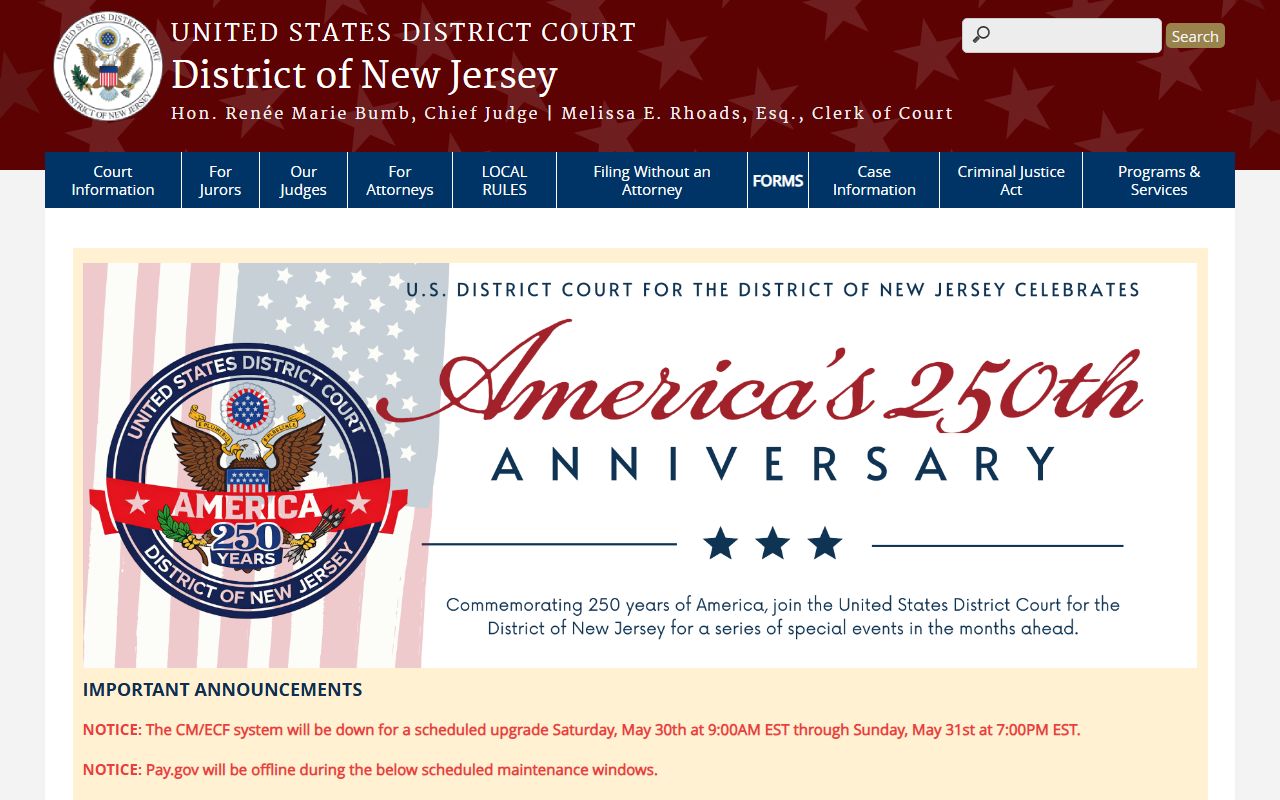
Case documents are filed and viewed through the court's electronic system.
The District of New Jersey CM/ECF system holds the electronic case files.
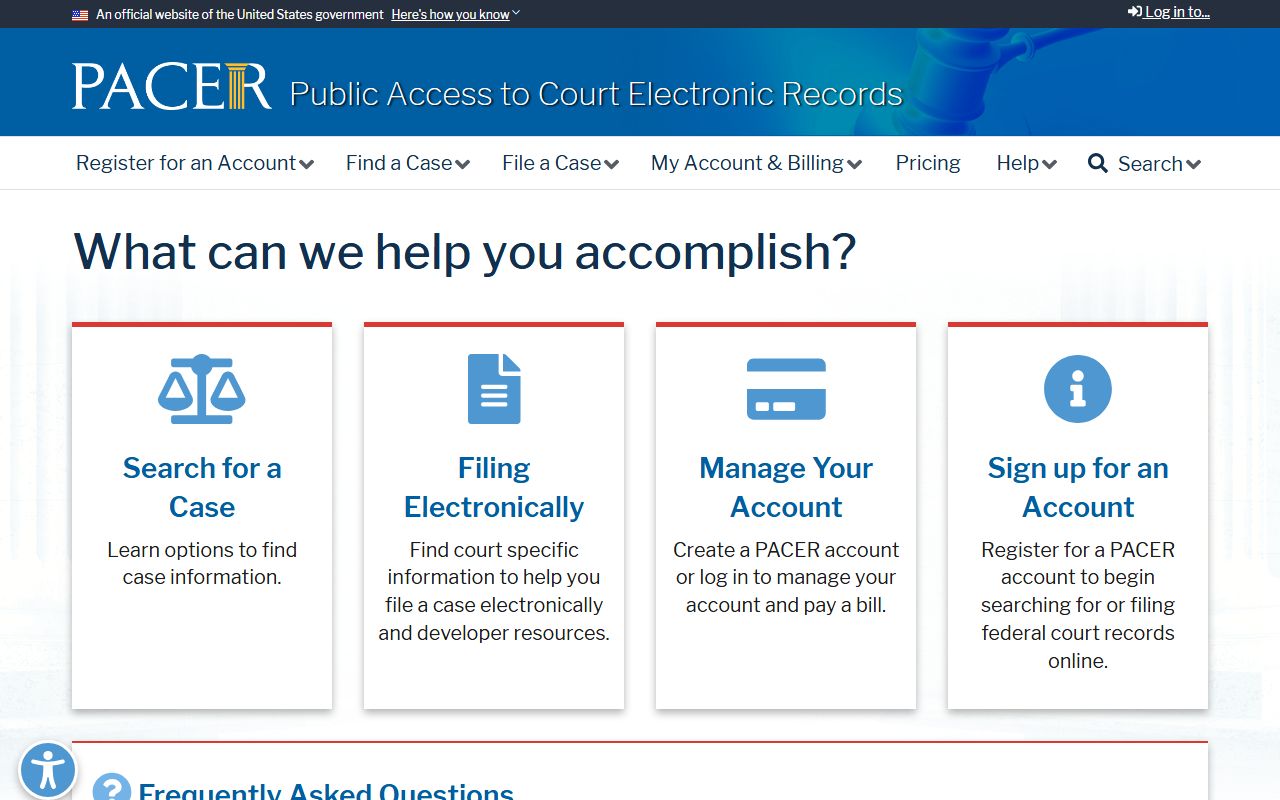
Public access to federal dockets nationwide runs through one paid portal.
PACER provides federal court records access, with registration and possible per-page fees.
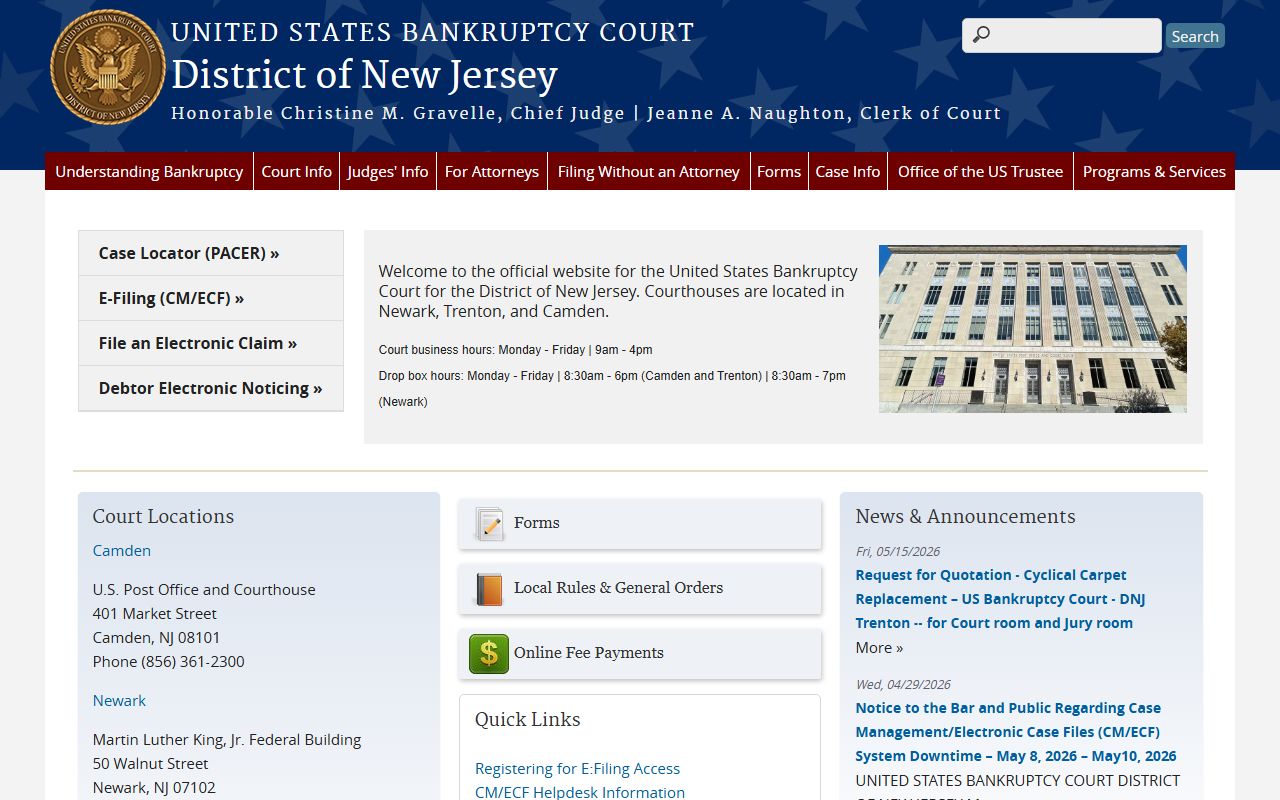
Bankruptcy is its own federal court in the state.
The U.S. Bankruptcy Court for the District of New Jersey handles federal bankruptcy cases.
Federal appeals from New Jersey go to one circuit court.
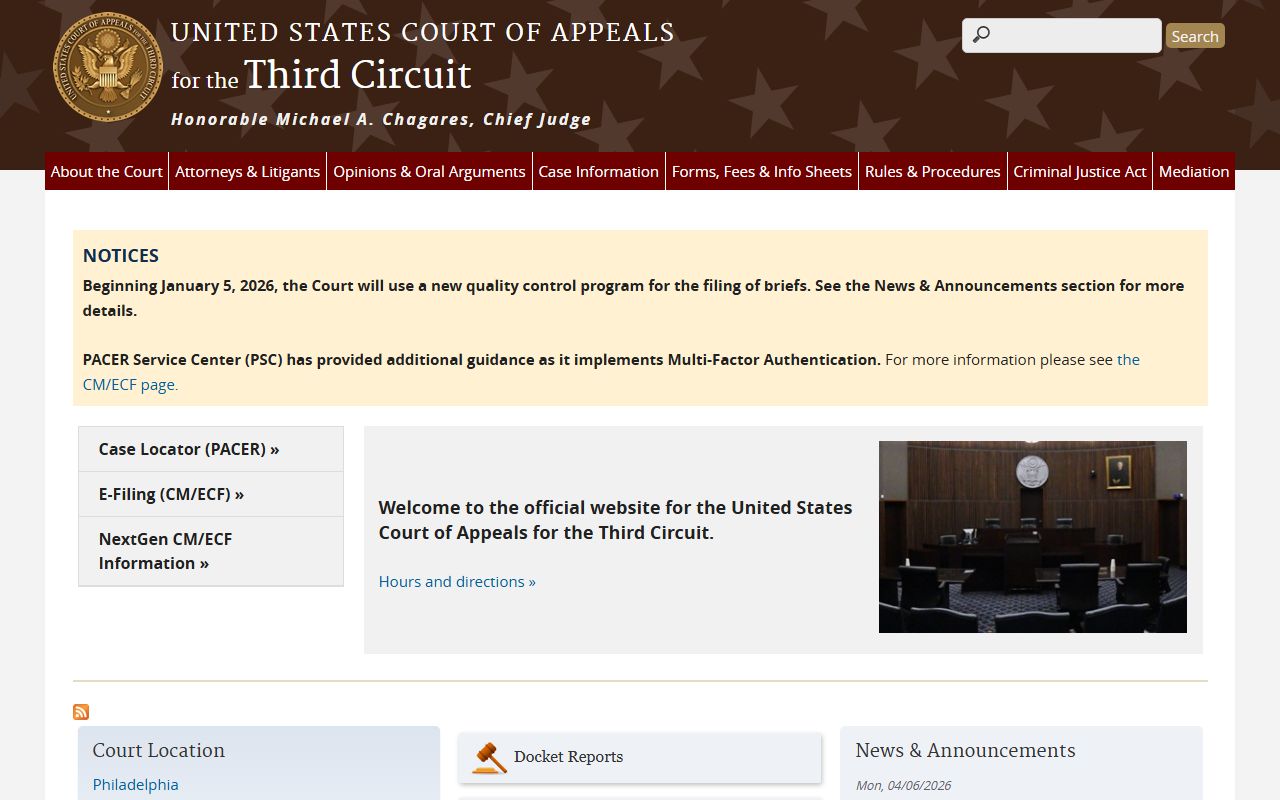
The U.S. Court of Appeals for the Third Circuit hears federal appeals from New Jersey.
A free secondary database can help when PACER fees are a barrier.
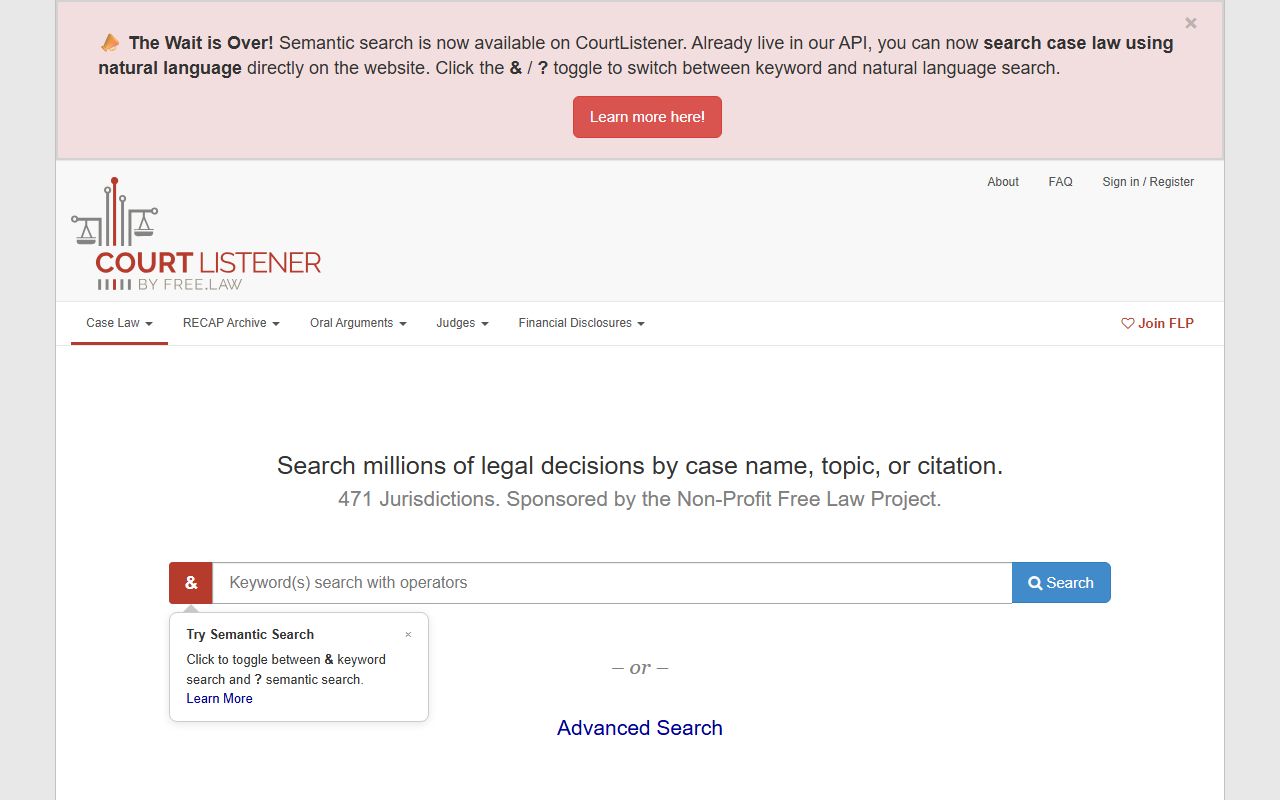
CourtListener offers free access to many federal opinions and dockets.
Together these cover the federal side that the Superior Court does not.