
How to Find Middlesex County Arrest Records
An arrest in Middlesex County usually leads to a booking at the county jail. The fastest public window into a recent arrest is the jail roster. The Middlesex County Adult Correction Center runs an online inmate lookup through the Archonix XJail public portal, which carries Booking Search, Booked Today, and Released Today tabs. A booking search shows who is currently or recently held.
Before you search, have a name or, if you know it, an inmate number. Date ranges on the portal cannot exceed 14 days at a time, so search in windows. The booking roster is the arrest-side tool; the court case search is separate.
- Open the county inmate lookup and launch the Archonix XJail public portal.
- Choose the Booking Search tab, or Booked Today for same-day arrests.
- Enter a last and first name, or an inmate number.
- Set a booking date range of 14 days or less if needed.
- Review the result for booking date, charges status, and any warrant fields.
For the full roster walkthrough, see the Middlesex County inmate records page.
Where Middlesex County Arrest Records Come From
Several offices touch an arrest. The Sheriff's Office, led by Sheriff Mildred S. Scott, handles court security, warrants, and transport. Adult Corrections runs the jail and the inmate lookup. The Middlesex County Prosecutor's Office decides charges and takes indictable cases to a grand jury. Local police make many of the arrests that feed the system.
Because the work is split, the arrest record itself can sit in more than one place. Booking data is at the jail. The charging decision and case file move to the prosecutor and the Superior Court Criminal Division. Police arrest reports are records of the arresting agency and follow OPRA. Knowing which office holds what saves a lot of dead ends.
What a Middlesex County Arrest Record Shows
The jail roster returns a set of booking fields. These describe the person and the booking event, not the court outcome. The table lists the fields the public portal shows.
| Field | What It Shows |
|---|---|
| Name | The booked person's name. |
| Inmate / Booking Number | The IDs tied to the booking event. |
| Booking Date / Time | When the person was booked in. |
| Race / Gender | Basic descriptors on the roster. |
| Height / Weight | Physical descriptors at booking. |
| Release Date / Time | When the person was released, if applicable. |
| Warrant Fields | Warrant ID, type, status, and issuing agency when present. |
Note: The roster warns against using the data to harass or threaten anyone; misuse can lead to criminal or civil liability.
Arrest Record vs Criminal Court Record
An arrest record and a criminal court record are not the same thing. One captures the booking; the other captures what the court did. People often need the court record to learn the real outcome of a case. The comparison sets them apart.
| Point | Arrest Record | Criminal Court Record |
|---|---|---|
| Created by | Police and the county jail | The Superior Court Criminal Division |
| Shows | Booking, charges at arrest, jail status | Charges, pleas, judgment, and sentence |
| Where to find it | Jail roster and arresting agency | Court records portal and records room |
| Proves guilt? | No | Only a conviction does |
Charges vs Convictions
This is the distinction that trips people up most. A charge is an accusation. A conviction is a finding of guilt by plea or trial. Many charges never become convictions. A case can be dismissed, downgraded, or sent to a diversion program like Pretrial Intervention or Recovery Court.
| Point | Charge | Conviction |
|---|---|---|
| Meaning | An accusation at or after arrest | A guilty finding by plea or trial |
| On the record | Appears even if later dropped | Carries the legal consequences |
| Can it change? | Yes, through dismissal or downgrade | Stands unless vacated or expunged |
So a name on a jail roster shows an arrest, nothing more. The court docket shows whether a charge turned into a conviction.
Mugshots and Booking Photos
A booking photo, often called a mugshot, is taken during the jail intake. The county roster did not clearly confirm a public mugshot on every record in our review, so a photo may or may not appear on a given result. New Jersey treats booking photos with more care than some states, and private mugshot sites are not official sources.
For an official photo or booking detail, the jail records office is the right contact. Avoid third-party mugshot pages, which often charge to remove images and do not reflect case outcomes. A booking photo is not evidence of guilt.
Public and Restricted Arrest Records
Not all arrest information is open. Juvenile charges are confidential by law under N.J.S.A. 2A:4A-60, with access limited to authorized people or by court order. Records tied to dismissed cases, diversion, or sensitive matters may be limited. Expunged arrests drop out of public systems entirely.
Two terms get confused here, so the comparison helps.
| Point | Sealed | Expunged |
|---|---|---|
| What happens | Record hidden by rule or court order | Record isolated and removed from public access |
| Authority | Court Rule 1:38 or a sealing order | N.J.S.A. 2C:52-1 et seq. |
| Who can still see it | Authorized parties or by order | Limited agencies under the order |
Expungement in New Jersey
Expungement isolates an eligible arrest or conviction from public view. It is governed by N.J.S.A. 2C:52-1 et seq. A person files a petition in the Superior Court, and a granted order goes out to the courts, police, the prosecutor, corrections, and the State Police. The NJSP Expungement Unit processes those orders and runs a portal to track pending petitions.
Eligibility turns on the offense type, waiting periods, and prior record. Marijuana-related matters have special pathways under newer reforms. A New Jersey expungement does not erase a federal record, which is separate. For self-help, the NJ Courts expungement resources walk a person through the steps.
State and Federal Criminal Records
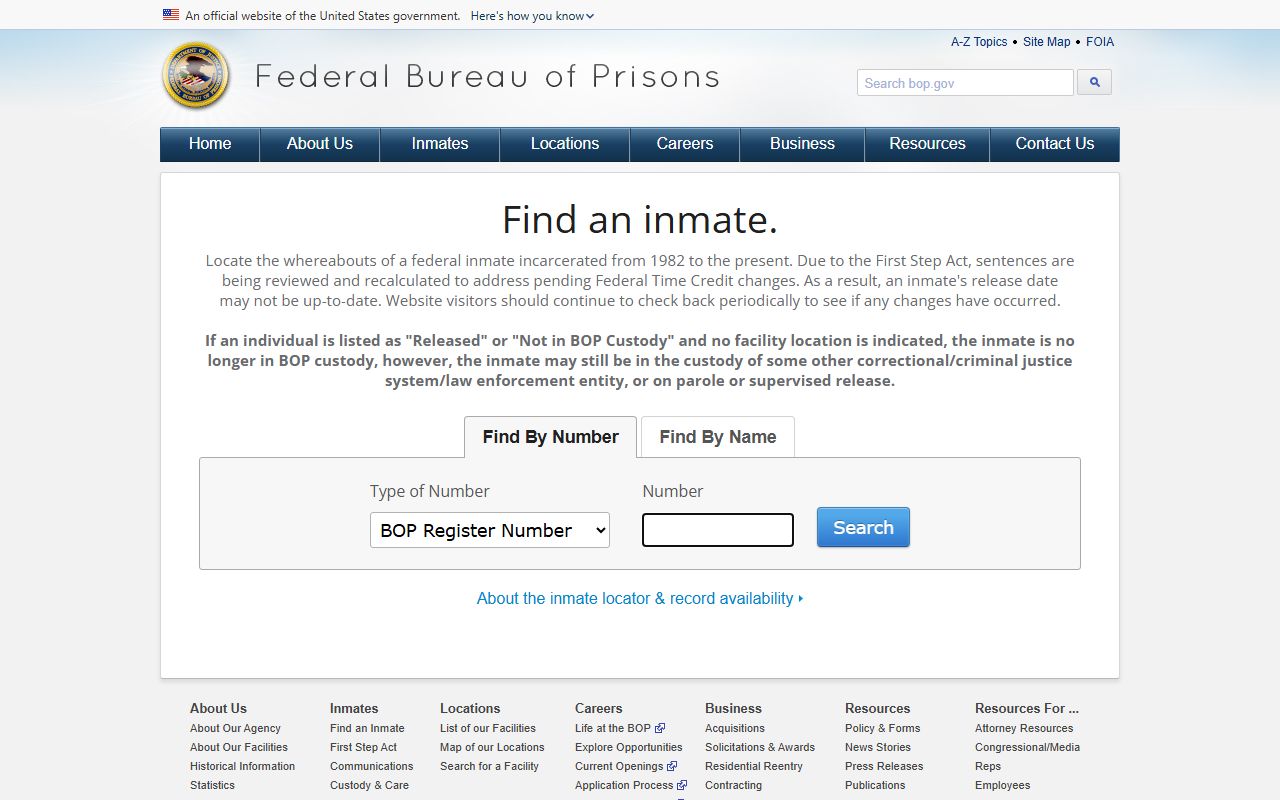
County booking is just one layer. People sentenced to state prison are found through the New Jersey Department of Corrections offender search. Federal cases and inmates sit outside state systems. The Bureau of Prisons runs a locator for federal inmates from 1982 to present.
The federal Bureau of Prisons inmate locator searches by name or register number.
For custody status and release alerts, VINELink offers notifications when an agency feed participates.
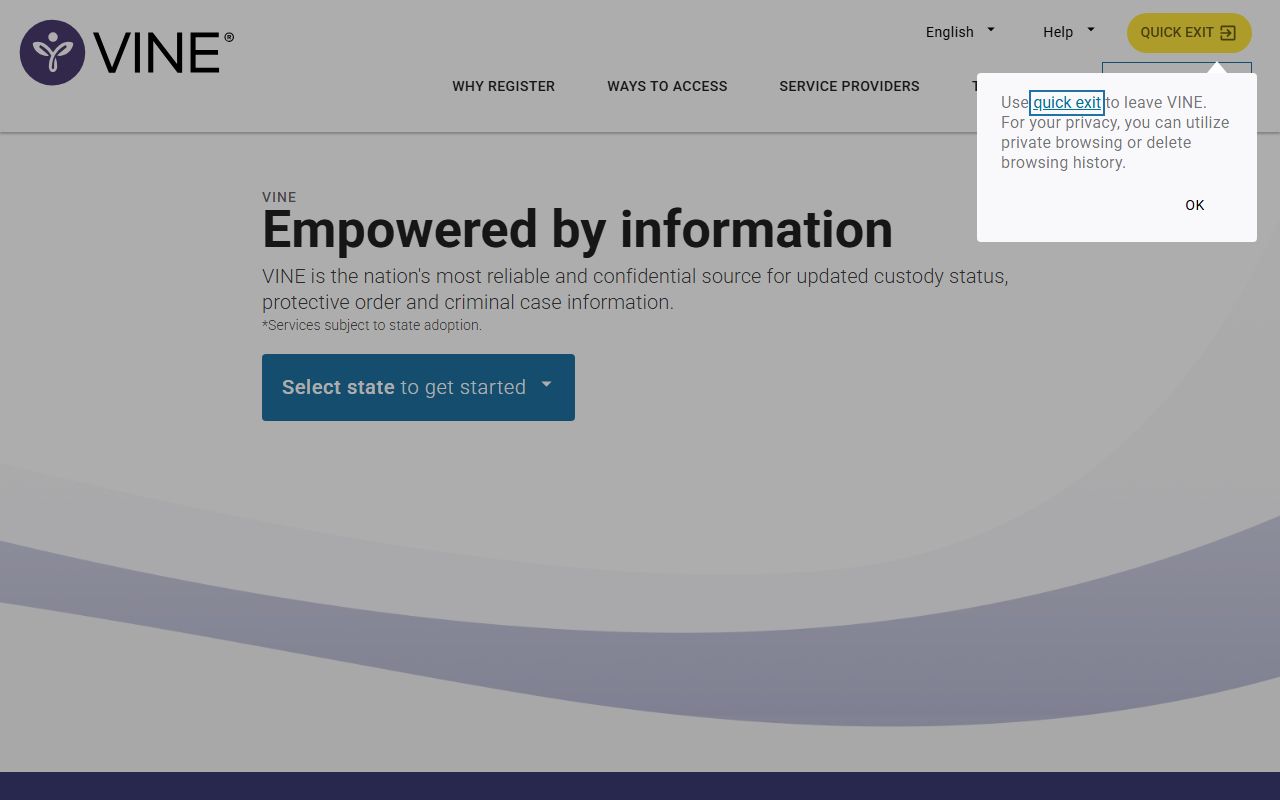
VINELink is a notification tool, not legal proof of custody. The released inmates page covers state and federal release searches in more depth.
The Prosecutor and Public Defender
The Middlesex County Prosecutor's Office prosecutes state crimes in the county and works with local, state, and federal agencies. Its office is listed at 25 Kirkpatrick Street, 3rd Floor, New Brunswick. For people who cannot afford a lawyer on an indictable charge, the New Jersey Office of the Public Defender steps in.
The Middlesex Office of the Public Defender is at 550 Jersey Avenue, New Brunswick, phone 732-937-6400.
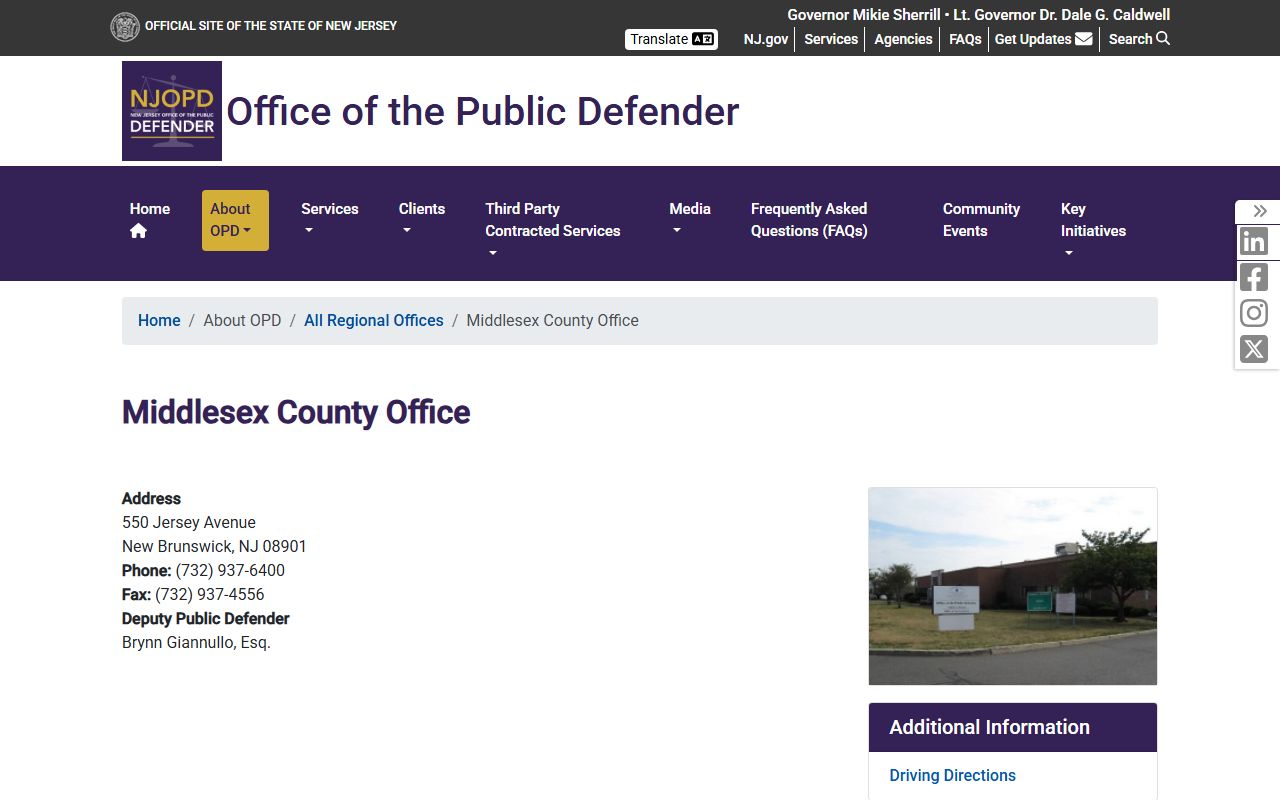
The Deputy Public Defender for the office is listed as Brynn Giannullo, Esq. The office represents indigent adults on indictable offenses and youth in delinquency matters.
Background Checks and Arrest Data
An arrest record is not a background check. A formal criminal history check in New Jersey runs through the State Police and follows strict rules about who may request it and why. Employers and licensing bodies have their own legal limits. The Fair Credit Reporting Act restricts how arrest data can be used for hiring or housing decisions.
Reading a jail roster for personal knowledge is fine. Using arrest data to make an FCRA-regulated decision is not what these public tools are for. For a true criminal history, use the official state process, not a roster screenshot.
Indictable and Disorderly Persons Offenses
New Jersey does not use the words felony and misdemeanor the way many states do. Serious crimes are indictable offenses, handled by the Superior Court Criminal Division. Lower-level matters are disorderly persons or petty disorderly persons offenses, handled in municipal court. The label changes how the case moves and where the record lands.
Here is the practical split for an arrest record.
- Indictable offenses go to the county prosecutor and a grand jury.
- Disorderly persons offenses are heard in the local municipal court.
- Many indictable complaints start in municipal court, where release conditions are set first.
- Some indictable charges get downgraded and finish in municipal court.
This is why one arrest can leave a trail in two different courts.
Recent Arrests and Diversion Programs
For same-day bookings, the Booked Today tab is the quickest look. It lists people taken in that day before the case has moved anywhere. A new booking does not mean the prosecutor has filed charges or that a grand jury has acted. The roster is a snapshot, and it can change fast as charges are confirmed or bail is set.
Diversion changes the arrest story too. Pretrial Intervention lets some first-time defendants avoid a conviction by completing a program. Recovery Court, reached at 732-645-4300 ext. 88062, serves people whose offenses tie to addiction. A case in either track shows program entries on the docket and may end in a dismissal, which then becomes eligible for expungement down the road.