
Middlesex County Court Record Clerks
New Jersey does not have a Texas-style district clerk who holds all court files. Instead, court records are held by the Judiciary through the Superior Court Clerk and the Middlesex Vicinage divisions. Each division keeps the records for its own caseload, so the Civil Division holds civil files, the Criminal Division holds criminal files, and so on.
This matters for anyone requesting a record. There is no single counter that hands over every type of case. The right office depends on whether the case is civil, criminal, family, or probate. The County Clerk, by contrast, is a separate elected officer who records land documents and does not hold court case files.
The Superior Court Clerk's Office at the state level also plays a role, especially for older records and certain statewide filings. Locally, though, most public contact happens with the Middlesex Vicinage divisions at the courthouse. Thinking of the clerk function as a set of division desks, rather than one office, is the most accurate way to picture how Middlesex County court records are kept and released.
Superior Court Clerk vs County Clerk
The two clerk roles confuse a lot of people, so it helps to separate them. One handles court cases; the other handles county records like deeds and trade names. The comparison lays out the split.
| Point | Court Record Clerks | County Clerk |
|---|---|---|
| Holds | Superior Court case files | Land records, trade names, passports |
| Part of | The Judiciary and the vicinage | County government |
| Access rules | Court Rule 1:38 | OPRA |
| Where to go | Court divisions at the courthouse | County Clerk office |
Which Division Handles Which Records
The Middlesex Vicinage splits its work across many divisions, each with its own extension off the main 732-645-4300 number. For a court record, calling the division that handled the case is the direct route. The table lists the main divisions and their lines.
| Division / Office | Phone |
|---|---|
| Trial Court Administration | 732-645-4300 ext. 88019 |
| Civil Division | 732-645-4300 ext. 88171 |
| Civil Assignment Office | 732-645-4300 ext. 88180 |
| Criminal Records Room | 732-645-4300 ext. 88155 |
| Family / Matrimonial | 732-645-4300 ext. 88580 |
| Finance | 732-645-4300 ext. 88670 |
| Ombudsman | 732-645-4300 ext. 88748 |
How to Request a Certified Copy
A certified copy carries the court's seal and is the version courts and agencies accept. Online dockets are not certified. To get a certified copy, you work with the division that holds the case. The steps below cover the process.
- Identify the case type and the division that handled it.
- Gather the docket number, party names, and the year.
- Contact the division, such as Civil at ext. 88171 or Criminal Records at ext. 88155.
- Ask for a certified copy and confirm the current fee and payment method.
- For older Superior Court records, ask whether the request routes to the state Records Center.
Note: Certified copies are required for legal proceedings, while uncertified online copies are not accepted in court.
Records Request Fields
A court-record request asks for enough detail to find the file. The more precise the request, the faster the clerk can pull it. The table lists what to include.
| Field | Type | Required | Notes |
|---|---|---|---|
| Docket / case number | Text | Recommended | The fastest way to locate a file. |
| Party names | Text | Yes | Needed when no docket number is known. |
| Case type / division | Selector | Yes | Civil, criminal, family, or probate. |
| Year filed | Date | Recommended | Helps route older records. |
| Copy type | Selector | Yes | Plain or certified copy. |
Fees for Copies
Copy fees depend on the office and the copy type. Plain copies cost less than certified ones, and certification adds a fee. Court divisions set their own amounts, so confirm the current charge before you send a request. For a sense of county copy costs, the Surrogate's posted rates are shown as a reference point.
| Item | Amount |
|---|---|
| Plain copy | Confirm current fee with the division |
| Certified copy | Adds a certification fee |
| Surrogate copies per page (reference) | $3 |
| Surrogate estate search (reference) | $10 |
Clerk's Office Contact and Hours
Most court-record requests center on the main courthouse in New Brunswick. The Criminal Records Room and the Civil Division both work off the main number with their own extensions. Public court hours are standard weekday business hours.
Middlesex County Courthouse
56 Paterson Street
New Brunswick, NJ 08903-0964
732-645-4300
Criminal Records Room: ext. 88155
Mon-Fri 8:30 a.m.-4:30 p.m.
OPRA and the Right Custodian
Court records follow the Judiciary's rules, but many related county records follow OPRA. When a record is not a court file, the request goes to the county custodian instead. The state OPRA pages explain how to identify the right office and submit a request.
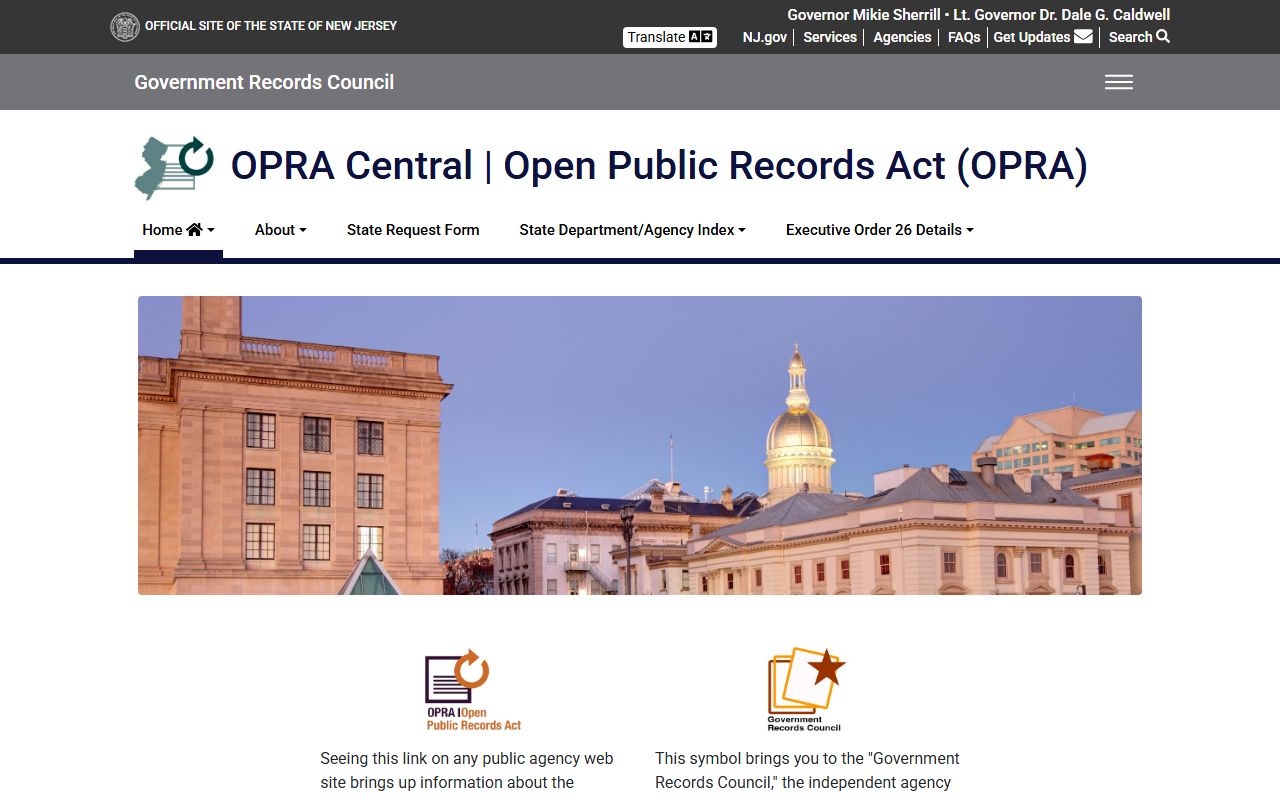
The state OPRA Central page is the hub for government-records requests.
For step-by-step help on picking the custodian, the request guidance is useful.
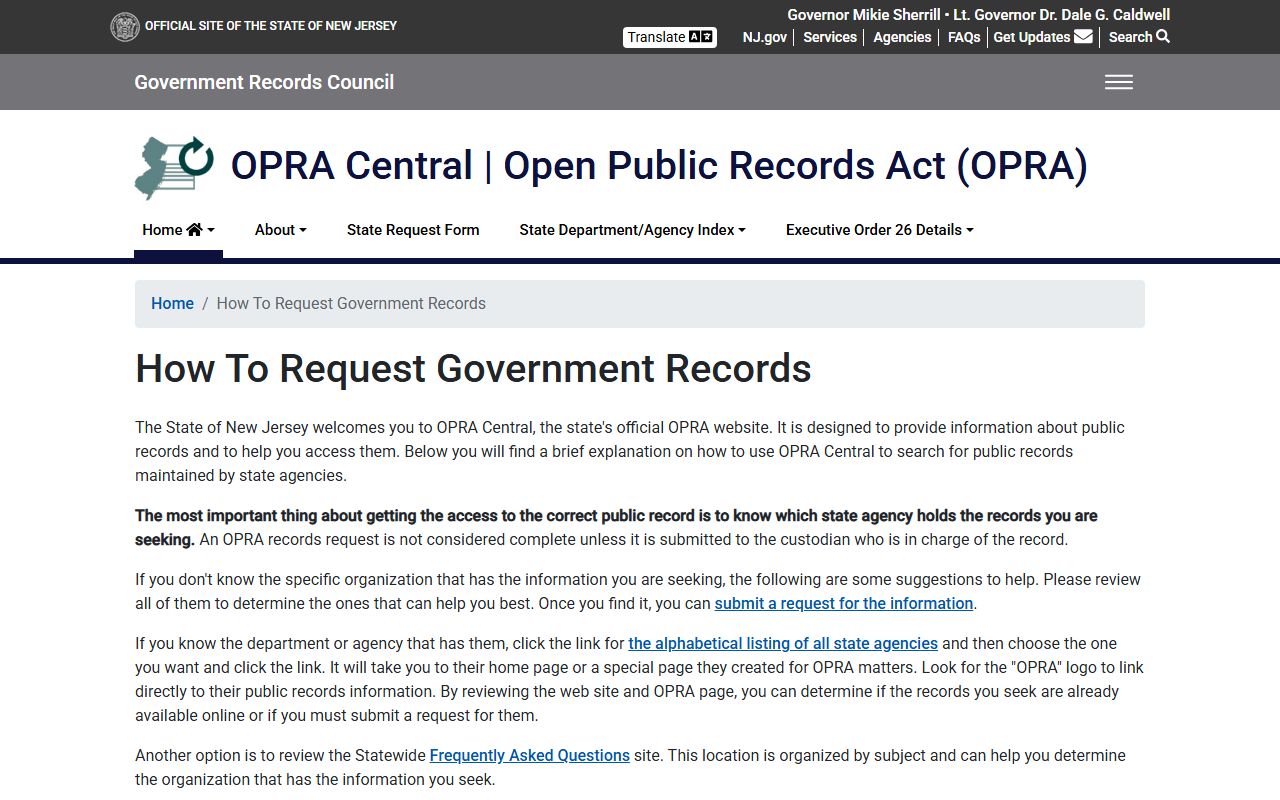
The public records page breaks down OPRA versus court-record access in more detail.
What the Court Record Clerks Do
The clerk function behind the courts does the quiet work that keeps cases moving. Clerks accept filings, stamp them in, and add each one to the docket. They maintain the official case file, schedule events, and issue certified copies when the public or the parties request them. They also collect filing fees and manage the records once a case closes.
Because New Jersey spreads this work across divisions, the person who pulls a civil judgment is not the same person who pulls a criminal sentencing order. Each division knows its own files best. That is a strength once you know where to call, but it can feel like a maze on the first try. The Trial Court Administration office, at ext. 88019, oversees the vicinage and can point a caller toward the correct division when the case type is unclear. The Ombudsman, at ext. 88748, is another helpful starting point for people who feel lost in the system, though that office guides rather than gives legal advice.
Common Reasons to Contact the Clerk
People reach out to the court-record offices for a handful of recurring needs. Some want a document; others want to confirm a date or fix an error. The most common reasons include the following.
- Getting a certified copy of a judgment, order, or disposition.
- Finding an older case that does not appear in the online portal.
- Confirming a hearing date or the status of a filing.
- Asking how to file a document or pay a fee.
- Correcting or updating information on a record.
For most of these, the division that handled the case is the first call, with the records room as a backup for criminal files.
Tips for Reaching the Right Office
A little preparation makes these calls go smoothly. Have the docket number in front of you, since it tells the clerk exactly which file to pull. Know the case type, because that decides the division. If you only have a name, expect the clerk to ask for a date range or other detail to narrow the search.
Timing helps too. Court offices keep standard weekday hours, and call volume tends to be heavier early in the week and around lunch. If your matter is sensitive or restricted, such as a family or juvenile file, be ready for the clerk to explain that access may require a court order or proof you are an authorized party. When a request crosses into county records rather than court files, the clerk will often redirect you to the County Clerk or another custodian, which is normal and not a dead end but simply a sign you have reached the wrong office.