
How to Find Middlesex County Marriage and Divorce Records
Marriage and divorce records follow different paths in New Jersey. The County Clerk is not the main marriage-license office, which surprises a lot of people. Licenses run through municipal registrars. Certificates come from the municipality or the state vital records office. Divorce records are Family Court matters and split by the year of the judgment.
So the first question is which record you need and from what year. A marriage license application is a local registrar task. A certified marriage certificate is a vital-records task. A divorce decree depends on whether it was entered in 2016 or later. Matching the record to the office is the whole game here.
It also helps to know the difference between a license, a certificate, and a decree. A license is the permission to marry. A certificate is the recorded proof that the marriage happened. A decree is the court judgment that ends a marriage. People often use these words loosely, but each one comes from a different office, and asking for the wrong one is the main reason a request stalls. When in doubt, describe what you actually need it for, and the office can tell you which document to order and how to request it.
Applying for a Marriage License
New Jersey marriage licenses are handled by the local municipal registrar, under the state's marriage laws at N.J.S.A. 37:1. Couples apply in the New Jersey municipality where either party lives. If neither party lives in New Jersey, they apply where the ceremony will take place. The license is valid only in New Jersey.
The NJ Department of Health marriage license page lays out the process.
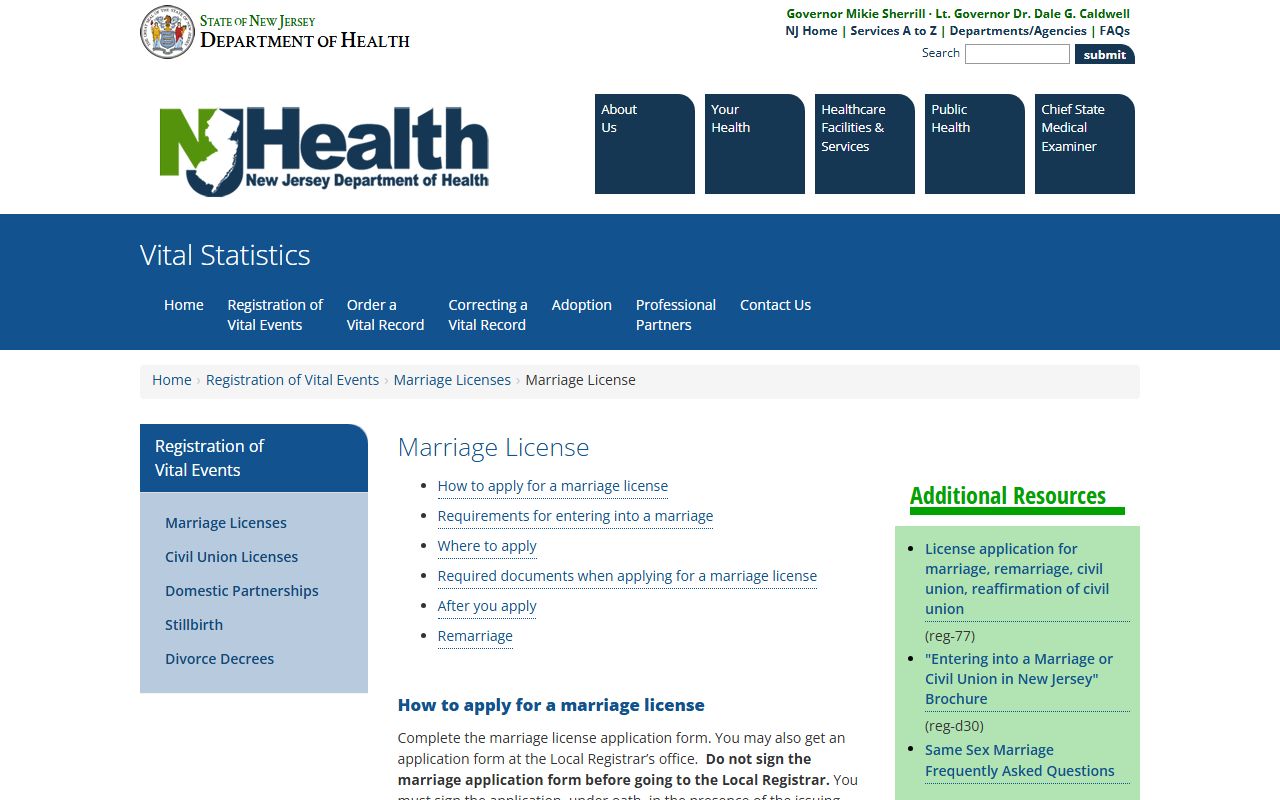
The basic steps look like this.
- Find the correct municipal registrar, based on residence or, for out-of-state couples, the ceremony location.
- Complete the New Jersey marriage license application with personal, parent, and ceremony details.
- Bring required ID and proof of residency if the registrar asks for it.
- Pay the local fee and observe any waiting period unless a court waiver applies.
- After the ceremony, the officiant returns the certificate to the registrar for recording.
Marriage License Application Fields
The application asks for standard vital-record details about both parties and the ceremony. Having these ready speeds the appointment. The table lists the main fields a registrar collects.
| Field Label | Type | Required | Notes / Format |
|---|---|---|---|
| Applicant names | Text | Yes | Both parties. |
| Residence / address | Text | Yes | Determines the correct municipality. |
| Parents' names / birthplaces | Text | Yes | Standard vital-record fields. |
| Ceremony municipality / date | Text / Date | Yes | Needed to issue the license. |
| Officiant / location | Text | Conditional | Who performs the ceremony and where. |
Where to Get a Marriage Certificate
A marriage certificate is different from the license. Once a couple is married and the certificate is recorded, certified copies come from the municipality where the license was issued or from the New Jersey Department of Health Office of Vital Statistics. The County Clerk registry FAQ points people to those offices, not the County Clerk, for marriage certificates.
The NJ Department of Health Vital Statistics office handles state-level vital records requests.
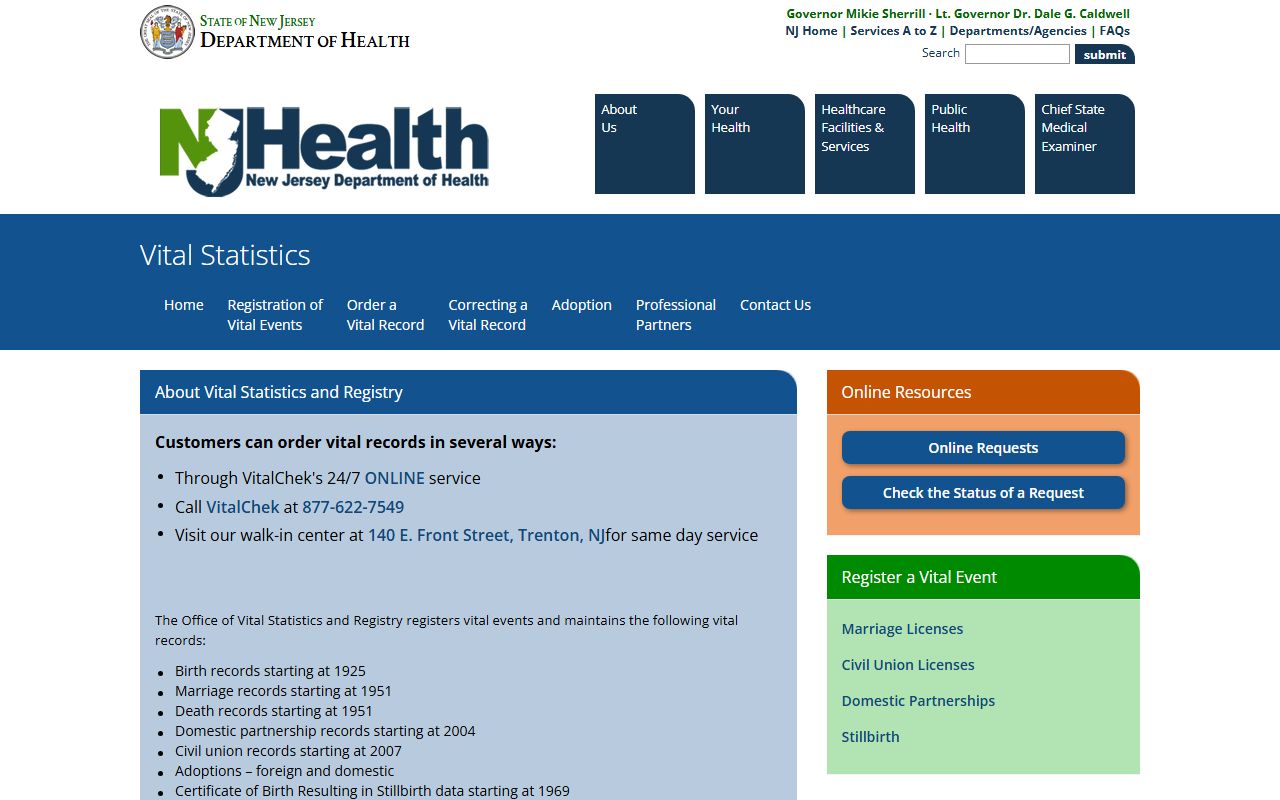
Older or genealogical marriage records may involve the State Archives or Vital Statistics, depending on the date.
Divorce Records by Year
Divorce decrees split cleanly by date in Middlesex County. Decrees from 2016 to present require contacting Middlesex County Family Court at 732-645-4300. Certified copies of decrees before 2016 are available through the Superior Court of New Jersey Records Center at 609-421-6100. Family Division matrimonial questions route through 732-645-4300 ext. 88580.
The NJ Department of Health divorce decree page explains the state's role.
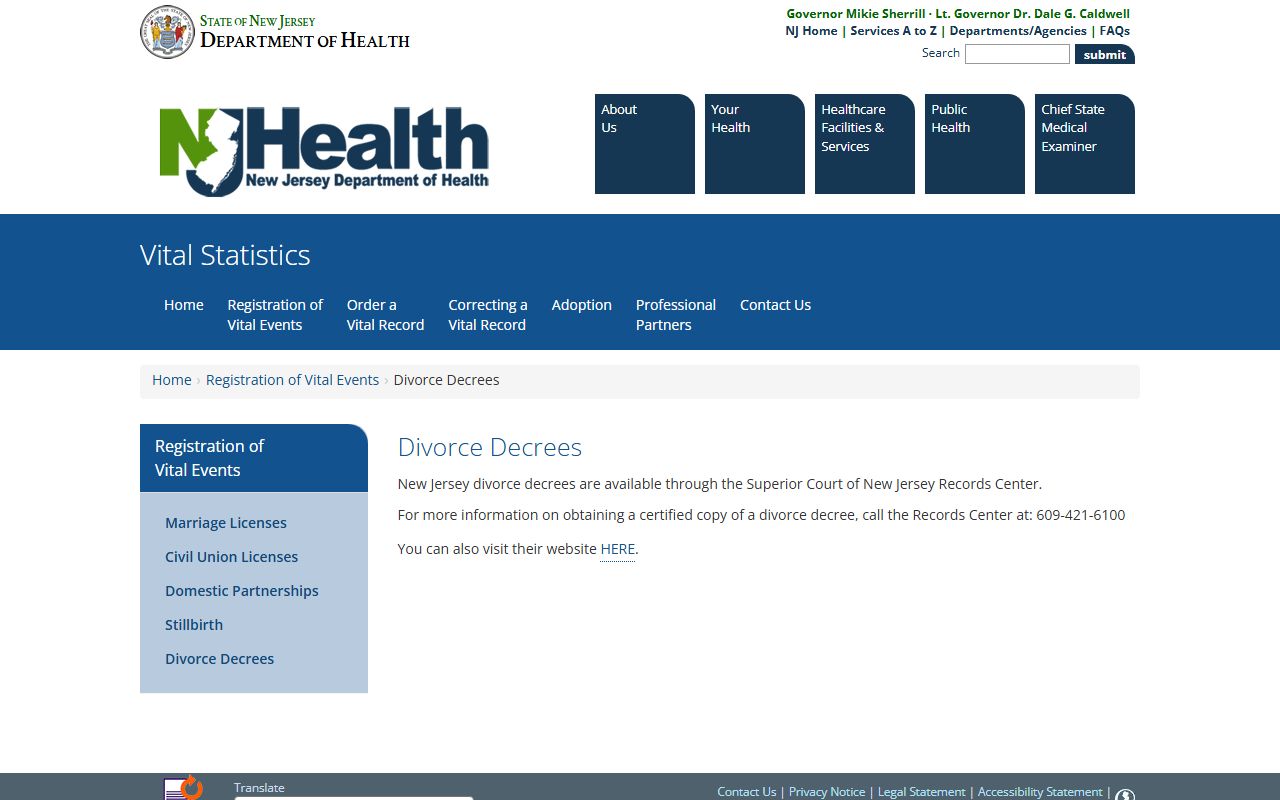
A divorce decree is a court record, so it comes from the court system rather than the County Clerk's land-records office.
Filing for Divorce in Family Court
A divorce in Middlesex County is filed in the Superior Court, Family Part, usually at the Family Courthouse at 120 New Street. People without a lawyer can use the NJ Courts divorce self-help forms. The general path runs through these steps.
- Confirm New Jersey residency and that Middlesex County is the right venue.
- Prepare the complaint using NJ Courts forms if self-represented.
- File in the Superior Court, Family Part, and pay the fee or request a waiver.
- Serve the other spouse and address custody, support, and property issues.
- Attend case management, mediation, or trial, then obtain the final judgment of divorce.
Note: A divorce decree is a court order, while a divorce certificate is a vital record, and the two are requested from different offices.
Requesting a Divorce Record
To pull a divorce record, a few details make the request faster. The court or Records Center needs enough to locate the case, and a year tells them which office handles it. The table lists what to gather.
| Field | Type | Required | Notes |
|---|---|---|---|
| Docket / case number | Text | Recommended | Speeds the Family Court or Records Center search. |
| Party names | Text | Yes | Both spouses' names. |
| Year of judgment | Date | Recommended | Decides the 2016-present vs older route. |
Which Office Holds Which Record
Because the records are spread out, a simple routing guide helps. Fees are set by each office, so confirm the current amount before you send a request. The table maps each record to its office.
| Record | Office | Contact |
|---|---|---|
| Marriage license | Municipal registrar | Town where a party lives |
| Marriage certificate | Municipality or NJ Vital Statistics | nj.gov/health/vital |
| Divorce decree, 2016-present | Middlesex County Family Court | 732-645-4300 |
| Divorce decree, before 2016 | NJ Superior Court Records Center | 609-421-6100 |
Confidential Family Records
Not all family records are open. While divorce dockets may be searchable, the deeper family files carry strong protections. Adoption records are confidential. Domestic violence details, victim addresses, and safety information can be restricted. Juvenile and abuse-and-neglect matters are closed to protect children.
So a person can often confirm that a divorce was granted, but the full contents of a sensitive family file may not be public. For case-specific access, the Family Division at 732-645-4300 can explain what is available and what needs a court order. The Surrogate's Court page covers estate matters that sometimes overlap with family planning.
What a Marriage or Divorce Record Shows
The two records carry different information. A marriage record reflects the license and certificate: the parties, the date and place of the ceremony, the officiant, and the recording details. A certified marriage certificate is the legal proof of the marriage, used for name changes, benefits, and immigration matters.
A divorce record centers on the final judgment of divorce, often called the decree. It confirms that the marriage was legally ended and the effective date. The full case file behind it can include custody, parenting time, child support, alimony, and property division, though much of that detail may be limited to the parties. For most everyday needs, people want the certified decree itself, which proves the divorce is final. The underlying court docket shows the steps the case took to reach that judgment.
Common Reasons People Need These Records
These records do real legal work. A certified marriage certificate or divorce decree is often required well after the event itself. The most common reasons people request one include the following.
- Changing a last name on a license, passport, or Social Security record.
- Remarrying, which usually requires proof a prior marriage ended.
- Settling estate, benefit, or insurance matters.
- Immigration or visa applications that ask for marital history.
- Updating records after a spouse's death.
For each of these, a certified copy carries weight that a plain printout does not. Order the certified version when an agency or court is involved.